

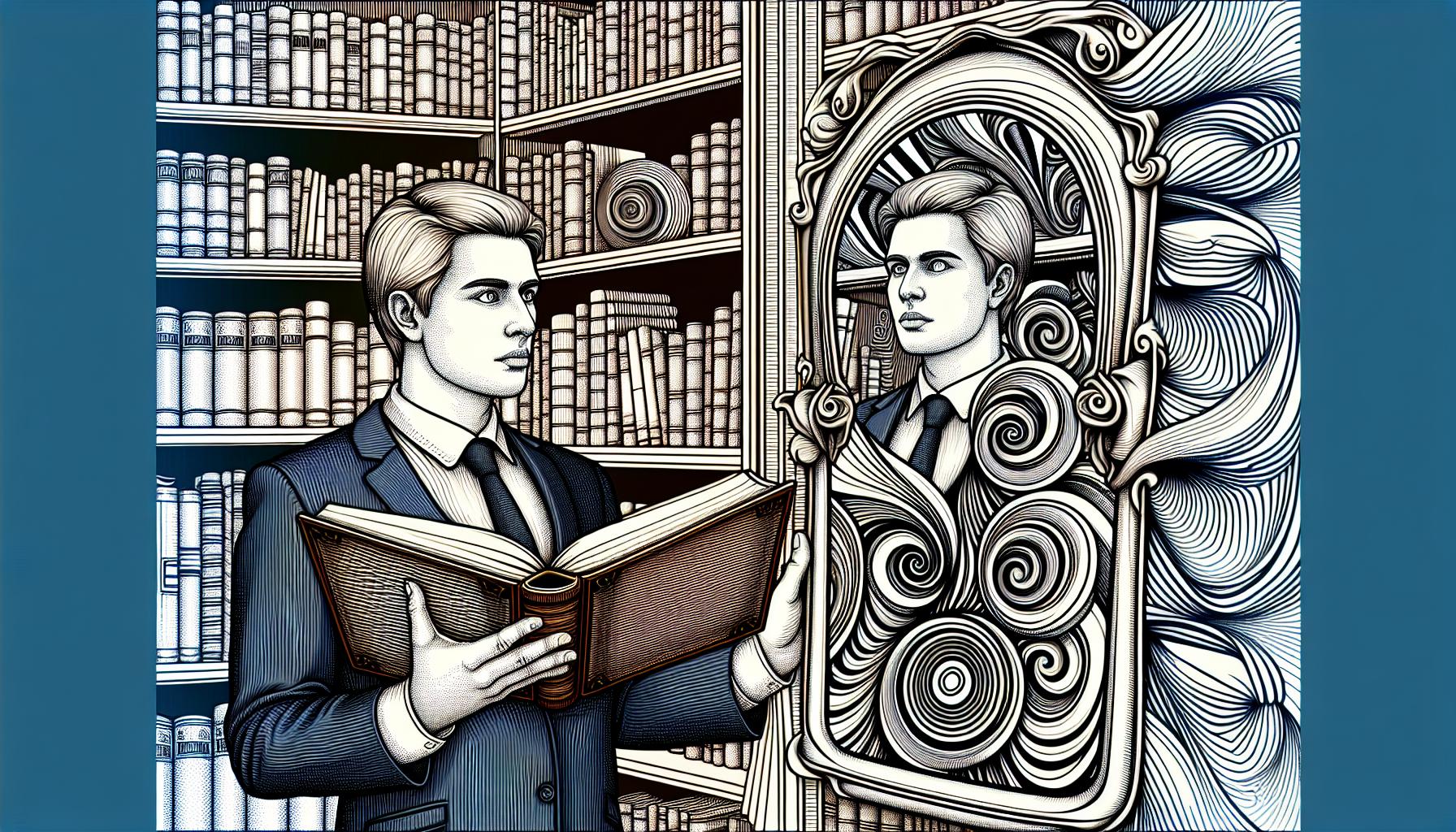
When we encounter the terms “allusion” and “illusion”, it’s easy to mix them up. Both words sound similar, but they carry distinct meanings that can significantly alter the message we’re trying to convey. Understanding the difference between allusion and illusion not only enriches our vocabulary but also sharpens our communication skills.
Allusion refers to a subtle or indirect reference to a person, place, event, or piece of literature. It’s a powerful tool in writing that adds depth and layers of meaning. On the other hand, illusion is all about perception. It tricks our senses, making us see or believe something that isn’t real. By mastering these concepts, we can avoid common pitfalls and make our writing more precise and impactful.
Key Takeaways
- Differences in Meaning: “Allusion” is a subtle reference to a well-known entity, while “illusion” refers to a deceptive perception that tricks the senses.
- Literary Significance: Allusions add depth and subtext to writing, relying on readers’ knowledge, whereas illusions are used to challenge perceptions and create dramatic effects.
- Historical Origins: Both terms have roots in Latin, with allusion stemming from “allusio” and illusion from “illusio”, reflecting their playful and deceptive natures.
- Common Confusions: Similar pronunciations and spellings often lead to confusion; understanding their distinct meanings is crucial for clear communication.
- Practical Applications: Employing allusions can enhance persuasive and literary writing, while illusions can captivate and engage readers through sensory deceptions.
Defining Allusion and Illusion
We often encounter confusion between “allusion” and “illusion,” although each has distinct meanings. Understanding these concepts can enhance our language skills, particularly in learning English.
What Is Allusion?
An allusion is a literary device that involves an indirect, yet intentional, reference to a person, place, event, or work of art, literature, or history. There are several key aspects:
- Reference: Allusions refer to entities outside the text itself. Examples include other literary works, historical events, famous individuals, or notable locations.
- Indirect: Allusions rely on the reader’s knowledge rather than explaining the context directly.
- Literary Device: Allusions enrich writing by adding depth, stimulating ideas, and triggering associations.
- Examples: When someone says “Don’t act like Romeo and Juliet,” they allude to Shakespeare’s play about ill-fated lovers.
What Is Illusion?
An illusion is a deceptive perception that differs from reality, misleading the senses. Details include:
- Perception: Illusions involve interpretations that differ from objective reality, leading to a false impression.
- Psychological Phenomenon: Illusions can result from cognitive processes where the brain interprets sensory information inaccurately.
- Examples: Optical illusions like the famous “Rubin’s Vase” demonstrate how perceptions can fluctuate between two interpretations.
Understanding these concepts, especially in the context of language learning, can improve proficiency and enrich communication.
Historical Context

Origins of Allusion
The term “allusion” originates from the Latin word “allusio,” which comes from “alludere,” meaning “to play with” or “to jest.” This Latin root combines “ad-” (to) and “ludere” (to play), suggesting a playful or indirect reference. The concept of allusion entered the English language in the early 16th century, influenced by the Old French “alusion.” It maintained its use as a literary or rhetorical device involving subtle references to other works, historical events, or cultural icons.
Historically, allusions have been used in literature to connect ideas the readers are already familiar with, adding depth and complexity to the text. For instance, in ancient Greek literature, Homer made brief allusions to mythic themes familiar to his audience. This technique extends beyond Greek texts, enriching narratives and illustrating points succinctly through shared knowledge.
The Evolution of Illusion in Literature
The term “illusion” comes from the Latin word “illusio,” derived from “illudere,” which means “to play against” or “to mock.” Unlike allusion, which is more subtextual, illusion deals with deceptive perceptions that mislead our senses. Although the concept fundamentally includes sensory deception, it has evolved to encompass various forms of cognitive misrepresentations in literature.
In literary works, illusions often create a sense of wonder or highlight the disparity between appearance and reality. For example, Shakespeare frequently utilised illusions in his plays to challenge characters’ perceptions and create dramatic tension. Optical illusions and cognitive illusions also illustrate how our minds can be tricked, further emphasizing the complex nature of human perception.
Comparing Allusion and Illusion
Exploring the confusion between “allusion” and “illusion” reveals crucial insights into their distinct meanings. This understanding enhances our vocabulary, improves communication skills, and enriches our grasp of English.
Similarities
- Similar Spelling and Pronunciation: “Allusion” and “illusion” share similar spelling and pronunciation. This often leads to confusion, especially among English learners, and even experienced writers. It’s essential to distinguish them to avoid miscommunication.
- Both Used in Creative Contexts: Both terms appear frequently in creative disciplines like literature and art. Allusions are prevalent in literature and poetry, enriching texts with deeper meanings. In contrast, illusions feature prominently in magic tricks and visual arts, creating deceptive perceptions.
Differences
- Allusion: An allusion is an indirect mention of a well-known historical or literary figure, event, or work. It adds depth to writing by hinting at something familiar. For example, saying “He met his Waterloo” alludes to Napoleon’s defeat, implying a major setback. Readers need prior knowledge of the reference to grasp the full context.
- Illusion: An illusion is a deceptive perception that misleads our senses. It involves cognitive processes that create false interpretations. Optical illusions like “Rubin’s Vase” illustrate how visual cues can trick our minds into seeing something that isn’t there. Illusions challenge our perception of reality, making us question what we see.
Impact on Literature and Culture
Allusion in Popular Works
Allusions play a significant role in literature and culture by offering richness and depth. We see authors like T.S. Eliot using allusions extensively, as in “The Waste Land,” where he references various works and cultural elements to deepen the poem’s complexity. An effective allusion leverages the reader’s knowledge, enabling them to draw connections seamlessly. For instance, in Homer’s “The Odyssey,” frequent allusions to Greek myths help frame the narrative within a larger cultural context. This technique excites readers who identify and appreciate these subtle references.
Illusion in Popular Works
Illusions also impact literature, primarily through the manipulation of perception. Shakespeare’s plays often create illusions that challenge characters’ and audiences’ understanding of reality, enhancing dramatic tension. In “Macbeth,” the illusion of the dagger signifies Macbeth’s internal conflict and descent into madness. These deceptive elements not only enrich the storyline but also engage the audience on a psychological level. Authors manipulate readers’ senses to create immersive, and sometimes unsettling, experiences through illusions.
Common Misconceptions
Misunderstanding the terms “allusion” and “illusion” is quite common among English learners. These words are often confused due to their similar spellings and pronunciations, even though their distinct meanings. We aim to clarify these differences to enrich vocabulary and improve communication skills.
Allusion Misunderstandings
An allusion is an indirect reference to external entities such as historical events, literary works, or popular culture. It’s a literary device adding depth to texts. Many confuse it with a direct mention, but allusions rely on readers’ prior knowledge.
Definition: An allusion enriches the text by drawing subtle connections. For instance, referring to someone as a “Good Samaritan” alludes to the biblical parable without explicitly mentioning it.
Usage: Allusions function as either nouns or verbs. For instance, “He made an allusion to Orwell’s ‘1984’” or “She alluded to Einstein’s theory of relativity”. This subtlety often escapes many, misleading them to think of it as a direct quotation.
Examples: The line “Buckle your seatbelt, Dorothy, ‘cause Kansas is going ‘bye-bye’” in “The Matrix” alludes to “The Wizard of Oz”. Similarly, saying, “This CEO is like a modern-day Scrooge” alludes to the character from Dickens’ “A Christmas Carol”.
Illusion Misunderstandings
An illusion, in contrast, refers to deceptive perceptions. It misleads our senses and creates a false interpretation of reality. Confusing illusions with misconceptions or visual inaccuracies is common.
Definition: An illusion distorts reality. For example, optical illusions like “Rubin’s Vase” trick our sight, making a singular image appear as two distinct ones.
Usage: The concept of illusion extends beyond visual tricks. Cognitive illusions also mislead our understanding. When we say, “His idea of a perfect world is an illusion,” we imply it’s an unattainable fantasy rather than a practical concept.
Examples: In Shakespeare’s “Macbeth,” the illusion of the dagger exemplifies how our minds can create deceptive visions based on internal conflicts. Likewise, mirages in deserts are classic examples of natural illusions caused by atmospheric conditions.
Understanding these distinctions enhances comprehension and avoids semantic errors, especially in tasks like writing IELTS or TOEFL essays.
Incorporating nuanced knowledge of allusion and illusion can also benefit Business English and Language Immersion courses, enriching the learning experience.
Practical Applications
Understanding the distinct uses of allusion and illusion enhances both writing and comprehension. Each has specific applications in various contexts.
Using Allusion Effectively
Allusions enrich texts by connecting them to wider cultural, historical, or literary contexts. In literature, allusions can add depth and layers of meaning. For example, mentioning “Pandora’s box” immediately evokes the myth of Pandora, suggesting the release of unforeseen troubles. In “The Waste Land,” T.S. Eliot uses allusions to various works and cultural elements to deepen the poem’s complexity. Authors use allusions to resonate on a deeper level with readers, assuming they share common knowledge.
In business writing, allusions can create a persuasive narrative. Referring to historic successes or famous literature can bolster arguments. For example, stating “This project is our moon landing” alludes to the Apollo 11 mission, implying it’s a groundbreaking and pivotal endeavour.
Crafting Illusion in Writing
Illusions in writing captivate readers by playing with their perceptions. Shakespeare’s “Macbeth” uses the illusion of the dagger to reflect Macbeth’s internal conflict. Authors use illusions to develop dramatic tension, challenge perceptions, and create immersive experiences.
Visual illusions, like optical illusions in texts, add layers of engagement. Describing a magic trick in a story, for instance, can leave readers questioning reality. Writers use sensory words to craft vivid illusions, often surprising readers with unexpected twists.
Understanding these devices can significantly benefit learners in English courses, including IELTS and TOEFL, by enhancing reading comprehension and creative writing skills.
Conclusion
Mastering the distinction between allusion and illusion enriches our communication and comprehension skills. Allusions add depth by connecting texts to broader cultural and historical contexts, while illusions challenge our perception, creating engaging and thought-provoking experiences. By understanding these concepts, we not only enhance our writing but also gain a deeper appreciation of literature and art. Let’s embrace the power of allusion and illusion to elevate our language proficiency and creative expression.
Frequently Asked Questions
What is the difference between allusion and illusion?
Allusion is an indirect reference to something well-known, adding depth to writing. Illusion, however, is a deceptive perception that misleads our senses. Understanding these terms enhances both vocabulary and communication skills.
Can you give an example of an allusion?
Certainly! For instance, saying “Don’t act like Romeo and Juliet” alludes to Shakespeare’s play about ill-fated lovers, relying on the reader’s prior knowledge for context.
Why are allusions important in writing?
Allusions enrich texts by connecting them to broader cultural, historical, or literary contexts, adding layers of meaning that engage readers more deeply.
What is Rubin’s Vase?
Rubin’s Vase is an optical illusion that highlights how our perception can switch between seeing two faces or a vase, demonstrating how illusions mislead our senses.
How do illusions impact literature?
Illusions in literature, like the dagger in Shakespeare’s “Macbeth,” create dramatic tension and challenge readers’ perceptions, adding complexity to the narrative.
Why do English learners often confuse allusion and illusion?
The similar spelling and pronunciation of allusion and illusion often lead to confusion, but understanding their distinct meanings is crucial for clear communication.
How can understanding allusions improve my writing?
Understanding allusions enables you to enrich your writing by making subtle connections to well-known figures, events, or works, thus engaging your audience more effectively.
What is an example of an illusion in literature?
In Shakespeare’s “Macbeth,” the vision of a dagger represents an illusion, reflecting Macbeth’s internal conflict and distorting his perception of reality.
Where do the terms allusion and illusion come from?
Allusion comes from the Latin “allusio,” meaning “to play with,” while illusion derives from “illusio,” meaning “to play against,” highlighting their different interactions with reality.
How do allusions and illusions affect the reader’s experience?
Allusions create deeper connections and enrich understanding, while illusions challenge perception and create immersive experiences that engage readers on a psychological level.

The British Language School's management team consists of dedicated professionals with a deep passion for education. With years of collective experience in language instruction and academic development, they are committed to providing top-tier learning opportunities for all students. Each member brings a wealth of knowledge and innovative approaches to modern education, ensuring that both teachers and learners thrive in a dynamic, supportive environment.